
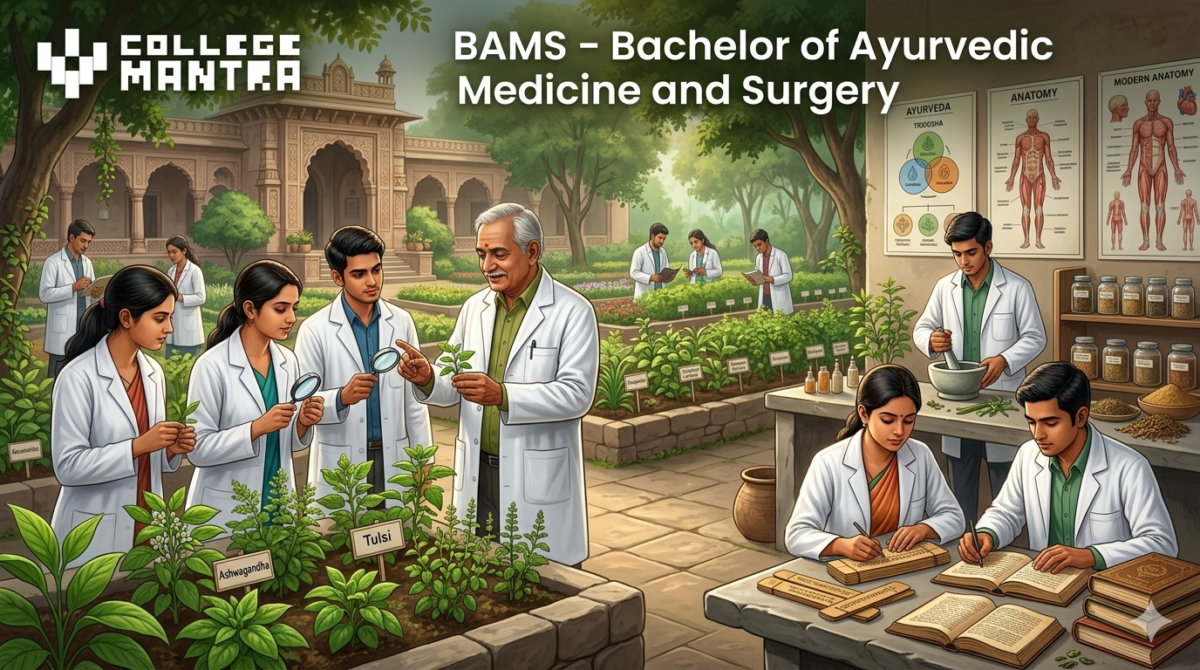
The Bachelor of Ayurvedic Medicine and Surgery (BAMS) is a comprehensive professional degree in India that integrates the traditional healing systems of Ayurveda with modern medical science. As the world shifts toward holistic and preventive healthcare, BAMS has gained significant prestige, offering a path for those who wish to practice as “Vaidyas” (Ayurvedic Doctors) while being grounded in contemporary clinical knowledge.
What is BAMS?
BAMS is a five-and-a-half-year undergraduate program regulated by the National Commission for Indian System of Medicine (NCISM). It is designed to produce practitioners who can diagnose and treat illnesses using the principles of Tridosha (Vata, Pitta, and Kapha) while also understanding modern anatomy, physiology, and pharmacology.
The course structure consists of:
4.5 Years of academic sessions (divided into three or four “Professionals”).
1 Year of compulsory rotatory internship.
The Curriculum: Ancient Wisdom meets Modern Science
The First Professional (1.5 Years): The Roots
The first phase focuses on the fundamental principles of life and the human body from both Ayurvedic and modern perspectives.
Padartha Vigyan: The philosophy of Ayurveda and the laws of nature.
Sanskrit: Since the original texts (Samhitas) are in Sanskrit, students learn the language to interpret classical verses accurately.
Kriya Sharir (Physiology): Studying how the body functions, comparing the concept of Doshas with modern physiological systems.
Rachana Sharir (Anatomy): Detailed study of human anatomy, including cadaver dissection, alongside the Ayurvedic concept of Marma (vital points).
The Second Professional (1.5 Years): The Pharmacy
This stage moves into the study of herbs, minerals, and the causes of disease.
Dravyaguna Vigyan (Pharmacology): Identification and medicinal properties of hundreds of plants.
Rasashastra & Bhaishajya Kalpana: The science of Ayurvedic pharmaceutics, including the processing of metals, minerals, and the preparation of oils and decoctions.
Roga Nidan (Pathology): Understanding how diseases manifest and progress.
Charaka Samhita (Purvardha): Intensive study of the foundational text of internal medicine.
The Third & Final Professional (1.5 Years): Clinical Specialization
Students enter the hospital wards to learn how to treat patients.
Kayachikitsa: Internal medicine—the heart of Ayurvedic practice.
Shalya Tantra: Ayurvedic surgery and para-surgical procedures (like Kshara Sutra for fistula).
Shalakya Tantra: Diseases of the Eyes, Ears, Nose, Throat, and Head (ENT and Ophthalmology).
Prasuti Tantra & Stri Roga: Obstetrics and Gynecology.
Kaumarbhritya: Pediatrics.
Panchakarma: The famous five-fold detoxification and rejuvenation therapy.
The Internship: Real-World Practice
The final 12 months are spent in clinical rotations. Students work in various departments of an Ayurvedic hospital and often spend time in modern civil hospitals to gain exposure to emergency medicine, labor rooms, and surgical units. This year is crucial for developing “Hand-on” clinical confidence.
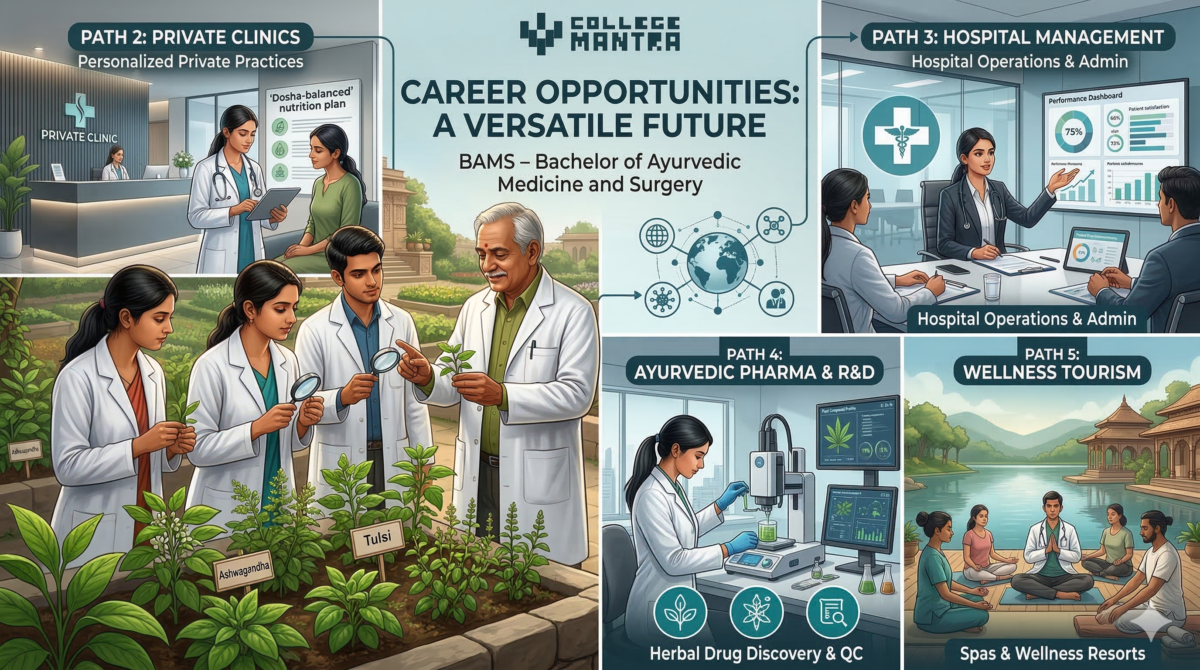
Career Opportunities: A Versatile Future
1. Clinical Practice
Private Clinics: Many BAMS graduates start their own wellness centers or clinics.
Ayurvedic Hospitals: Working as a Medical Officer in established private Ayurvedic hospitals or chains like Kottakkal Arya Vaidya Sala.
2. Government Sector
Medical Officer: Recruitment through state-level PSC exams or the UPSC for central government health schemes (CGHS).
National Health Mission (NHM): Working in rural healthcare centers.
3. Specialization (MD/MS Ayurveda)
Graduates can appear for the AIAPGET to pursue post-graduation in 14 different specialties, such as Shalya Tantra (Surgery), Kayachikitsa (Medicine), or Panchakarma.
4. Research and Development
With the global interest in herbal medicine, there is a massive demand for BAMS doctors in R&D departments of pharmaceutical giants like Himalaya, Dabur, and Patanjali.
5. Corporate and Hospital Management
Health Insurance: Working as medical underwriters or claim processors.
Hospital Administration: Managing wellness retreats and luxury Ayurvedic spas, particularly in the medical tourism sector.
Essential Skills for BAMS Students
Analytical Thinking: You must be able to correlate ancient terminology with modern medical findings.
Empathy: Ayurveda is patient-centric, focusing on the mental and spiritual state along with the physical.
Language Proficiency: A willingness to learn Sanskrit is vital for mastering the classical texts.
Observation: Developing the skill of Nadi Pariksha (Pulse Diagnosis) requires years of practice and keen observation.
Pros and Cons of BAMS
| Pros | Cons |
| Holistic Approach: Focuses on permanent cure and lifestyle modification rather than just symptom management. | Language Barrier: Initial difficulty in mastering Sanskrit and classical terminologies. |
| Global Demand: Growing international interest in Yoga and Ayurveda opens doors for overseas practice. | Public Perception: Occasionally faces skepticism from those who do not understand the scientific basis of Ayurveda. |
| Low Side-Effect Profile: Ayurvedic treatments are generally safer for long-term chronic conditions. | Lengthy Study: Requires deep dedication to master two different systems of medicine simultaneously. |
Final Thoughts
BAMS is not a “secondary” option to MBBS; it is a distinct, profound science that offers a different lens through which to view human health. It requires a student who is equally comfortable in a modern anatomy lab and reading ancient palm-leaf manuscripts. For those who want to treat the root cause of illness and promote lifelong wellness, BAMS is a deeply rewarding career.