
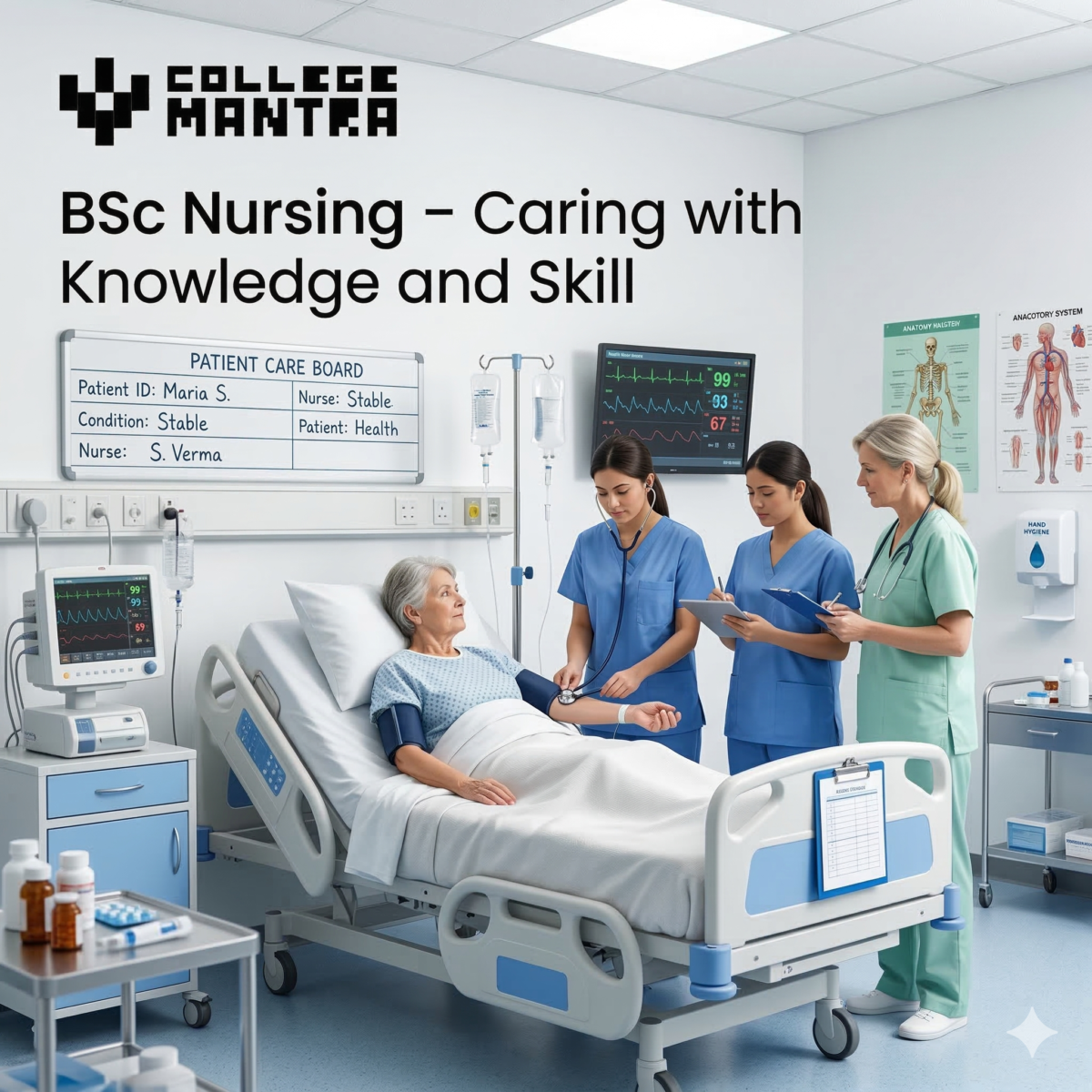
Bachelor of Science in Nursing (B.Sc. Nursing) is an essential professional undergraduate degree for those aspiring to enter the dynamic and compassionate field of nursing. Far more than just bedside care, this program provides a deep academic and clinical foundation in medical science, patient psychology, and healthcare management, preparing students to become highly skilled, empathetic nursing leaders.
What is B.Sc. Nursing?
B.Sc. Nursing is a professional academic degree that is the foundational requirement for registration as a professional nurse in India and most other parts of the world. The course is designed to equip students with the critical thinking, technical skills, and ethical grounding needed to provide high-quality care to individuals, families, and communities.
The course typically spans 4 years, which includes:
Academic Study: Classroom lectures and laboratory practice.
Clinical Rotations: Comprehensive, supervised training in a variety of hospital and community settings.
The Academic Journey: From Theory to Patient Side
Years 1 & 2: Building the Medical Foundation
The first two years focus on understanding the human body, its functions, and the fundamentals of nursing practice.
Human Anatomy & Physiology: Detailed study of the structure and function of the human body.
Nursing Foundations: Mastering the core principles and skills of nursing, from patient assessment to hygiene and safety.
Psychology & Sociology: Understanding the social and behavioral aspects of health and illness.
Biochemistry & Microbiology: Learning about the chemical and microscopic processes relevant to disease and healing.
Pharmacology: Introduction to medication classifications, dosages, and safe administration.
Years 3 & 4: Developing Specialized Expertise
The final two years dive into complex clinical specialties and advanced nursing concepts.
Medical-Surgical Nursing: Advanced care for adult patients with complex medical and surgical conditions.
Maternity Nursing: Focus on healthcare for women during pregnancy, childbirth, and the postpartum period.
Child Health (Pediatric) Nursing: Providing comprehensive care for infants, children, and adolescents.
Mental Health Nursing: Understanding and caring for patients with psychiatric and mental health conditions.
Community Health Nursing: Addressing public health issues and providing care in community and rural settings.
Nursing Research & Statistics: Developing skills to critically appraise and contribute to evidence-based practice.
Healthcare Management & Leadership: Preparation for supervisory and leadership roles.
The Clinical Phase: The Heart of Nursing Education
The practical, clinical component is central to B.Sc. Nursing. Throughout the four years, students spend significant hours rotating through various departments in hospitals (such as ICU, CCU, operation theaters, and specialty clinics) as well as community health centers and schools. Under the guidance of clinical instructors, students apply their theoretical knowledge, perfect their technical skills, and develop the professional confidence to become independent practitioners.
Life After B.Sc. Nursing: Career Opportunities
The question every prospective nursing student asks is: “What are the job prospects?” The demand for skilled nurses is globally high, and a B.Sc. degree opens doors to a vast range of careers in healthcare and beyond.
1. Hospital-Based Clinical Roles
Registered Nurse (RN): Providing direct care in hospitals, from busy emergency departments to specialized ICUs.
Charge Nurse/Ward In-Charge: Taking on supervisory and leadership roles within a hospital ward.
Specialist Nurse: Pursuing specialization in fields like oncology, pediatrics, operation theater, or emergency nursing.
2. Community and Public Health
Public Health Nurse: Working with government agencies or non-profits to improve community health through education, screening programs, and home visits.
School Health Nurse: Managing the health and well-being of students in educational settings.
Occupational Health Nurse: Ensuring the health and safety of employees within corporate or industrial workplaces.
3. Higher Education & Research
M.Sc. Nursing & Ph.D.: Advanced academic study allows for specialization in specific clinical areas, education, or administration.
Clinical Nurse Educator: Teaching and training nursing students in academic or hospital settings.
Nurse Researcher: Contributing to the development of new nursing knowledge and evidence-based practices.
4. Leadership & Administration
Nurse Administrator/Manager: Overseeing nursing operations, budgeting, and staffing in healthcare facilities.
Quality Assurance Coordinator: Ensuring compliance with quality and safety standards in patient care.
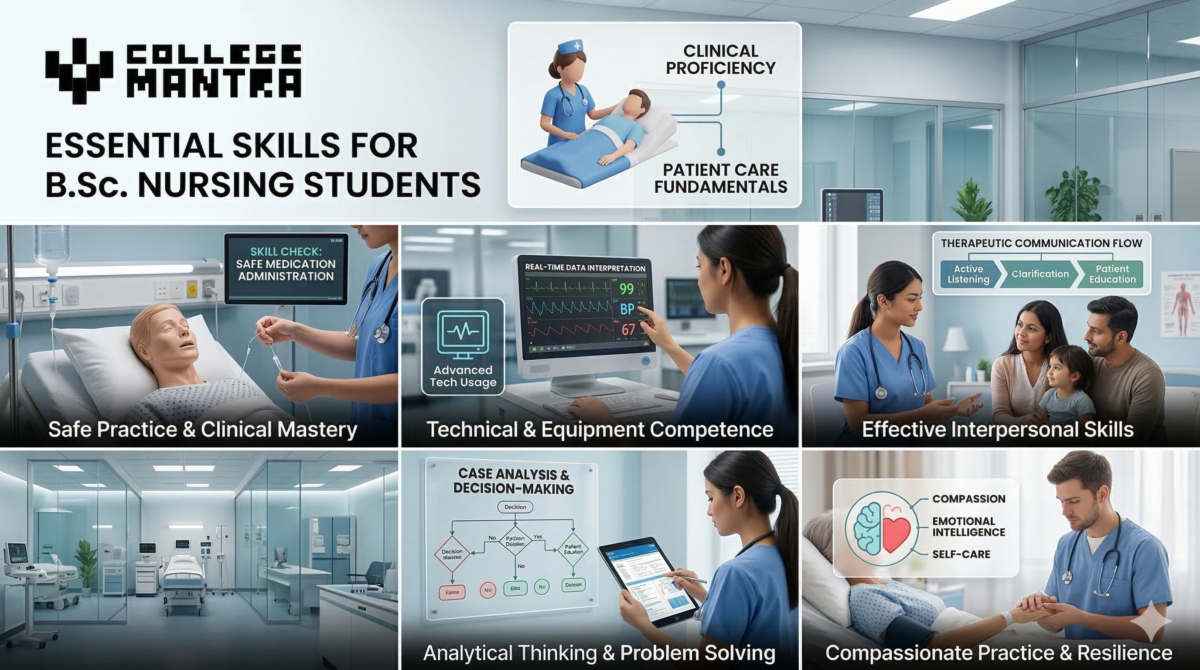
Essential Skills for B.Sc. Nursing Students
Successful B.Sc. Nursing candidates possess a unique combination of intellectual and interpersonal qualities:
Compassion & Empathy: A genuine desire to care for and support patients and their families.
Critical Thinking: The ability to analyze complex situations and make sound clinical judgments.
Technical Proficiency: Precision and skill in performing clinical procedures and operating medical technology.
Communication Skills: Effective listening and clear communication with patients, families, and the medical team.
Resilience & Stamina: The ability to manage demanding physical and emotional situations.
Lifelong Learning: An commitment to staying current with the latest medical and nursing advances.
Final Thoughts
B.Sc. Nursing is a demanding yet deeply rewarding path for those with a passion for healthcare and humanity. It provides the ideal balance of rigorous academic study and hands-on clinical experience, turning compassionate individuals into skilled medical professionals and empathetic nursing leaders. While the path is challenging, the ability to make a meaningful difference in the lives of patients and their families—from birth through the entire lifespan—is a privilege that few other careers offer.