
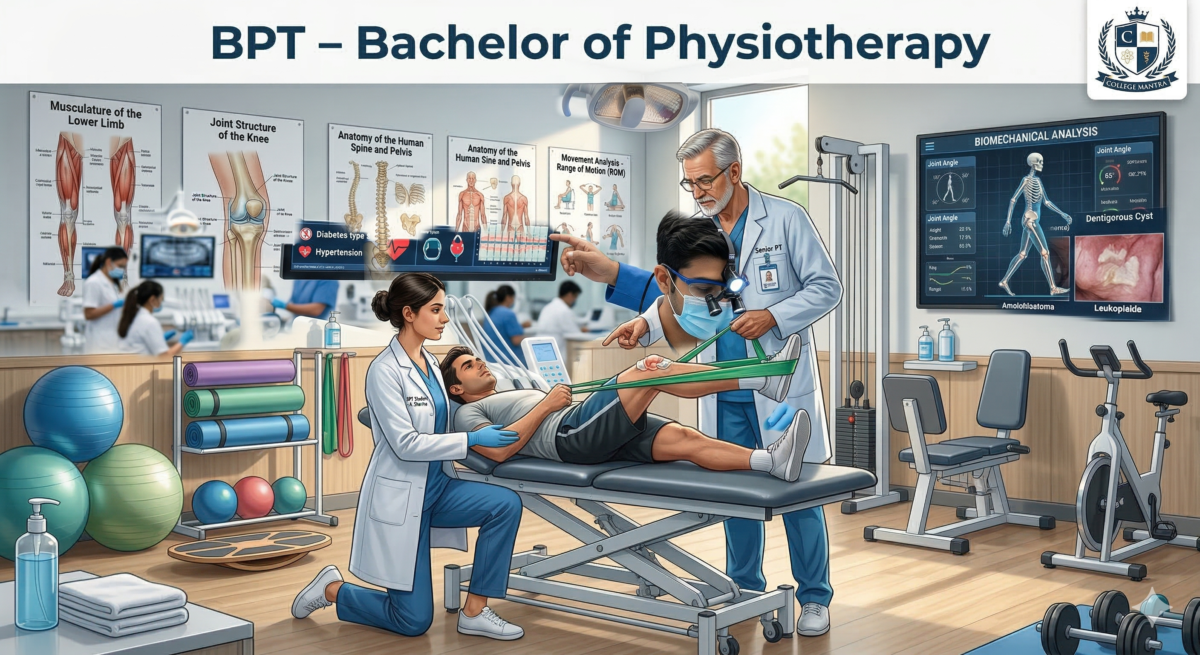
Welcome to the world of physical rehabilitation! The Bachelor of Physiotherapy (BPT) is a highly respected, dynamic, and rewarding undergraduate healthcare program. It focuses on the science of physical movement and the treatment of physical dysfunctions caused by injury, illness, disability, or aging. Unlike medical fields that rely heavily on pharmaceutical medication, physiotherapy employs physical methods—such as targeted exercise, manual therapy, massage, heat therapy, and electrotherapy—to restore mobility, alleviate pain, and improve the overall quality of life for patients.
Course Overview and Duration
The BPT program typically spans four and a half years. This includes four years of rigorous academic classroom learning and practical laboratory work, seamlessly followed by a mandatory six-month clinical internship.
The curriculum is designed to transform students into clinical experts who understand the intricate mechanics of the human body. As a BPT student, you do not just learn the names of bones and muscles; you learn how they interact, why they fail, the biomechanics behind human movement, and how to scientifically coax the body back into optimal function. It is a perfect blend of scientific rigor and compassionate patient care.
Eligibility and Admission Process
To embark on this educational journey, candidates must meet specific academic criteria:
Educational Background: Students need to have completed their 10+2 (or equivalent) education from a recognized board.
Core Subjects: The required stream is Science, specifically with Physics, Chemistry, and Biology (PCB) as core subjects.
Minimum Marks: Most universities require a minimum aggregate score of 50% in PCB, though this can vary by institution and reservation category.
Admission processes differ across universities. While some private colleges offer direct admission based on Class 12 board merit, many top-tier institutions and government colleges require candidates to clear entrance examinations. Exams like NEET (National Eligibility cum Entrance Test), IPU CET, BCECE, or specific state-level medical entrance exams are often the primary gateways to securing a seat in a reputable program.
Year-by-Year Syllabus Breakdown
The four-and-a-half-year journey is systematically structured to build a progressive understanding of human anatomy and therapeutic techniques.
First Year (The Foundation): You will dive deep into Human Anatomy and Physiology. Understanding the normal structure and function of the body is absolutely crucial before you can understand its dysfunctions. Core subjects also include Biochemistry, Sociology, Psychology, and basic nursing principles.
Second Year (Understanding Dysfunction): The focus shifts to what goes wrong in the body. Subjects like Pathology, Microbiology, and Pharmacology are introduced. Crucially, you will begin studying Biomechanics and Kinesiology (the mechanics of human movement) alongside Exercise Therapy, which forms the absolute core of physical rehabilitation.
Third Year (Clinical Application): The practical, clinical application begins. You will study Orthopedics, General Medicine, and General Surgery from a physiotherapist’s perspective. Electrotherapy (using electrical energy for medical treatment, such as ultrasound or TENS) is a major practical and theoretical subject introduced this year.
Fourth Year (Specialization): Highly specialized fields take center stage. You will learn about Neurological disorders, Cardiopulmonary conditions, Sports Physiotherapy, Pediatrics, and Geriatrics. Community-based rehabilitation and professional ethics are also covered to prepare you for independent practice.
Six-Month Internship: This is the crowning phase of the degree. Under the supervision of experienced doctors and senior physiotherapists, you will rotate through various hospital departments (ICU, Orthopedics, Neurology, Outpatient clinics) to gain hands-on clinical experience with real patients.
Essential Skills for Success
A successful physiotherapist needs much more than just book smarts.
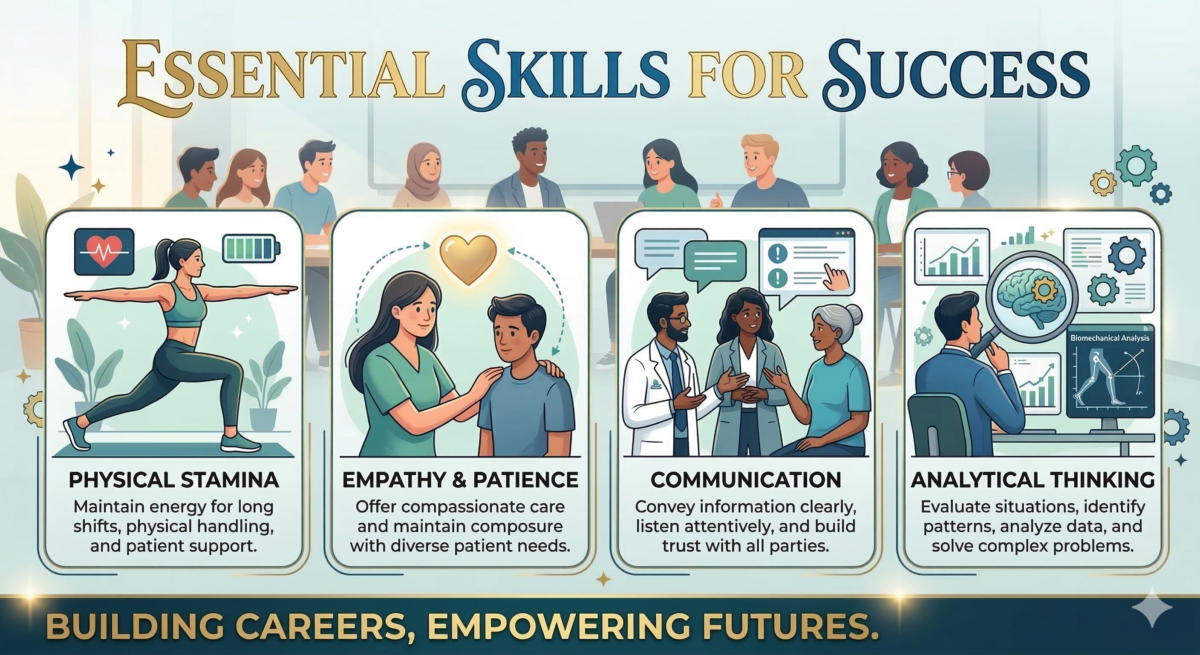
Physical Stamina: The job involves standing for long hours, physically assisting patients, and demonstrating exercises.
Empathy and Patience: You are often dealing with people in chronic pain or those recovering from traumatic, life-altering injuries. Progress can be slow, and patience is vital.
Communication: Excellent communication skills are required to explain complex exercises in simple terms and to motivate patients who might be frustrated with their recovery timeline.
Analytical Thinking: Keen observational skills help in accurately diagnosing movement disorders and tailoring highly individualized treatment plans.
Career Scope and Job Opportunities
The demand for qualified physiotherapists is growing exponentially. Modern sedentary lifestyles, increasing desk jobs, a growing aging population, and a rising focus on sports and fitness have all contributed to this surge. Graduates can find lucrative and fulfilling roles in various settings:
Hospitals and Clinics: Working in intensive care units, post-operative wards, and multi-specialty outpatient departments.
Sports Teams and Facilities: Every professional sports team employs physiotherapists to prevent injuries, manage athletic conditioning, and rehabilitate injured players.
Rehabilitation Centers: Helping patients recover from strokes, spinal cord injuries, or major vehicular accidents.
Corporate Ergonomics: Consulting for modern corporations to design safer, posture-friendly workspaces to prevent repetitive strain injuries among employees.
Private Practice: After gaining a few years of clinical experience, many physiotherapists open their own successful private clinics, offering specialized care and building their own loyal patient base.
Higher Education: Specializations (MPT)
For those looking to specialize further, the BPT degree opens doors to Master of Physiotherapy (MPT) programs. These two-year postgraduate programs allow you to become an expert in a specific niche. Popular specializations include:
MPT in Orthopedics (focusing on bone, joint, and muscle issues)
MPT in Neurology (treating stroke, Parkinson’s, and spinal cord injuries)
MPT in Sports Physiotherapy
MPT in Cardiopulmonary Sciences Beyond a Master’s degree, you can also pursue a Ph.D. in Physiotherapy to enter the fields of advanced clinical research or academia as a university professor.