
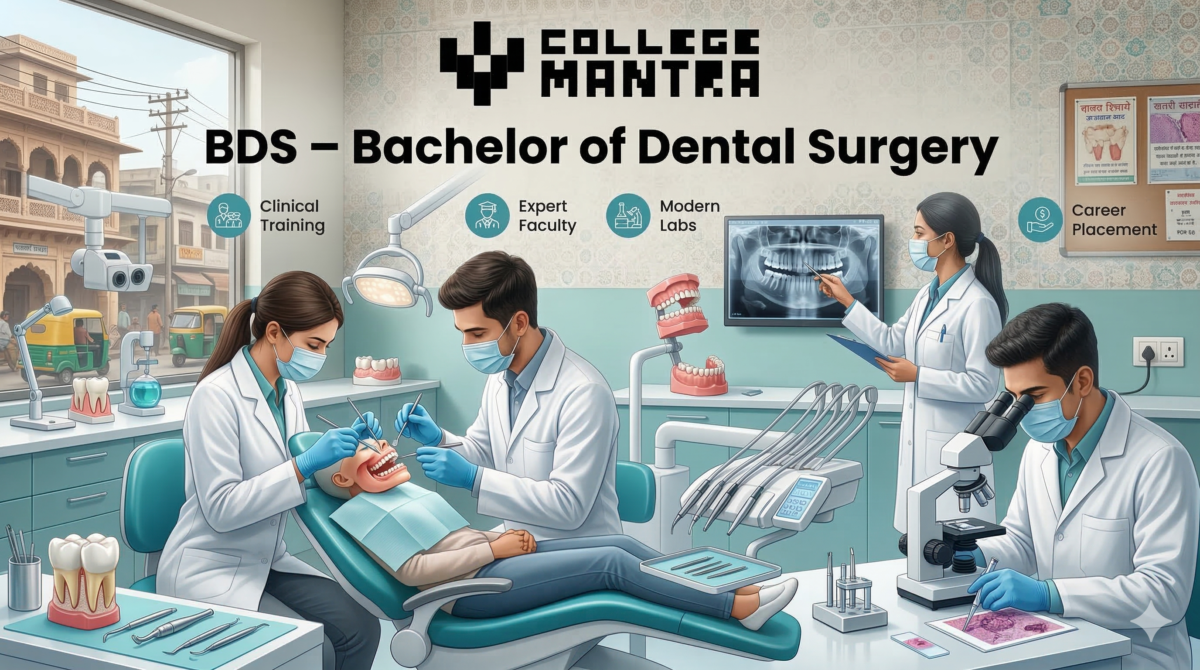
Starting a career in dentistry is a marathon, not a sprint. If you are looking for a comprehensive roadmap for the Bachelor of Dental Surgery (BDS)—covering the curriculum, the grind, and the gold at the end of the tunnel—you’ve come to the right place.
What is BDS?
The Bachelor of Dental Surgery is a professional undergraduate degree for those aspiring to become licensed dentists. It is the dental equivalent of an MBBS. While many perceive dentistry as “just teeth,” it is actually a complex surgical branch of medicine involving the study of the craniofacial complex, including the jaw, oral mucosa, and adjacent structures.
The course typically spans 5 years:
4 Years of academic study and clinical training.
1 Year of compulsory rotatory internship.
The Academic Breakdown: Year by Year
Year 1: The Foundation
The first year is often a shock to the system because it bridges the gap between high school biology and medical science.
Human Anatomy & Physiology: You’ll study the whole body, with a heavy focus on the head and neck.
Biochemistry: Understanding the chemical processes within the body.
Dental Anatomy & Oral Histology: This is where the “dental” part starts. You will spend hours carving tooth models out of wax blocks to understand morphology.
Year 2: The Pre-Clinical Phase
This is the year of the “phantom head.” Before you touch a human patient, you practice on mannequins.
Pathology & Microbiology: Learning how diseases and bacteria affect the body.
Pharmacology: Understanding drugs, dosages, and anesthesia.
Dental Materials: Studying the properties of silver amalgams, resins, and cements.
Pre-clinical Prosthodontics & Operative Dentistry: Refining your hand skills by preparing cavities and making dentures on models.
Year 3: Stepping into the Clinic
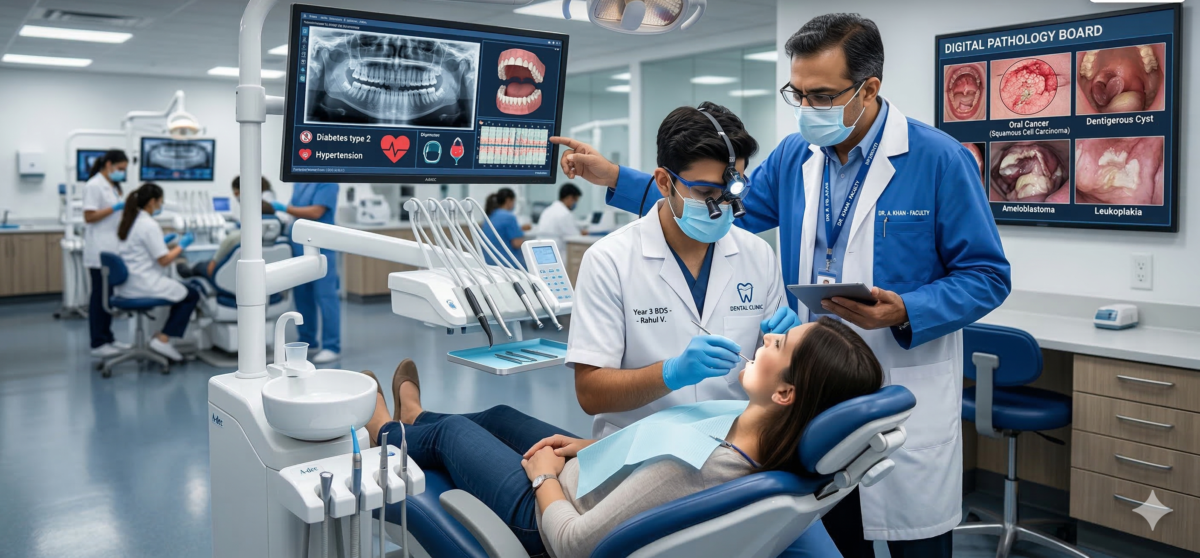
The stakes get higher as you start seeing real patients under strict supervision.
General Medicine & General Surgery: Dentists must understand systemic health (like heart disease or diabetes) because it directly impacts dental treatment.
Oral Pathology: Identifying tumors, cysts, and oral cancers.
Year 4: The Final Stretch
This year is a deep dive into the eight specialized branches of dentistry:
Oral Medicine & Radiology: Diagnosis and X-rays.
Oral & Maxillofacial Surgery: Extractions and jaw surgeries.
Orthodontics: Braces and alignment.
Periodontics: Gum diseases and implants.
Pedodontics: Pediatric (child) dentistry.
Prosthodontics: Crowns, bridges, and dentures.
Conservative Dentistry & Endodontics: Fillings and Root Canals (RCT).
Public Health Dentistry: Community awareness and rural camps.
The Internship: Where Theory Meets Reality
The final year is the Compulsory Rotatory Residential Internship (CRRI). This is arguably the most important year. You are no longer just a student; you are a trainee doctor. You rotate through every department, managing high patient volumes, handling emergencies, and perfecting your chairside manner.
Life After BDS: Career Pathways
The question every BDS student asks is: “What’s next?” The beauty of this degree is its versatility.
1. Clinical Practice
Private Practice: Opening your own clinic is the dream for many. It offers autonomy and high earning potential but requires significant initial investment in equipment.
Associate Dentist: Working for an established clinic or a dental chain to gain experience and save capital.
2. Higher Education (MDS)
The Master of Dental Surgery (MDS) allows you to specialize. Specialists (like Oral Surgeons or Orthodontists) generally command higher fees and deal with more complex cases.
3. Government Jobs
You can join as a Dental Surgeon in government hospitals, the Army Dental Corps, or through state-level PSC exams. These roles offer stability, a respected rank, and excellent benefits.
4. Beyond the Chair
If you realize you don’t want to drill teeth forever, you can pivot to:
Masters in Public Health (MPH): Working with global organizations like the WHO.
Hospital Administration (MBA/MHA): Managing the business side of healthcare.
Clinical Research: Working for pharmaceutical companies in drug trials.
Academicia: Becoming a lecturer or professor in a dental college.
Skills You Need to Survive (and Thrive)
A high GPA is great, but dentistry is a manual craft. You need:
Fine Motor Skills: You are working in millimeters. A steady hand is non-negotiable.
Patience: Some procedures take hours, and some patients are terrified.
Communication: You have to explain complex procedures to laypeople and build trust.
Artistic Eye: Restoring a front tooth is as much about aesthetics and “smile design” as it is about medicine.